


Ferro Alloys
UNG group was founded in 2003, we specialized in the manufacturing of recarburizer for Steel industry, and investmenting the plants of calcined bauixte, Calcium aluminate and Ceramic sand. It characterized by its continual effort to update and improve its products range, and by the search for solutions to the problems and demands posed by its customers.OUR PRODUCT Carbon&Graphite Recarburizer, Calcium Alumin, Calcium Aluminate (Fused, Sintered), Calcined Bauxite, Mullite (Sintered, Fused), Ferro Alloys, Inoculant, Nodulizer, Black Silicon Carbide, Steel Shot.


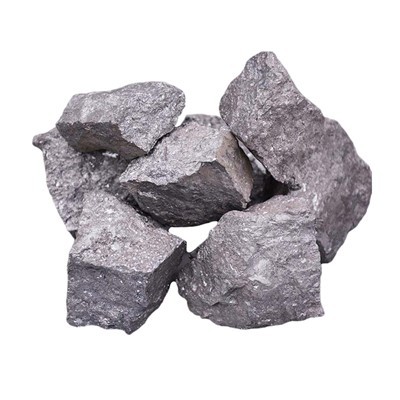


Why Choose Us
Production Market
We have built a stable clientele worldwide, USA, Mexico, Spain, Germany, Italy, Poland, Middle East, Egypt, India, Southeast Asia.etc.
Our History
UNG group was founded in 2003 ,we specialized in the manufacturing of recarburizer for Steel industry, and investmenting the plants of calcined bauixte ,Calcium aluminate and Ceramic sand.
Our Service
Contact customers to understand their needs and make quotations. Confirm the order, and produce, pack and ship in time.
Our After-sales
Taking the initiative to take responsibility, the group constantly strives to update and improve the product range and seek solutions to solve the problems and needs raised by customers.

Ferrotungsten
Composed of iron and tungsten. It increases steel hardness when resistance to wear, heat, and pressure is required.
Ferrochrome
An alloy created by combining iron and chromium. Ferrochrome’s primary use is in stainless steel production. This alloy contributes strength and corrosion resistance to the steel.
Ferromanganese
An alloy that combines iron with manganese. It's crucial in the steelmaking process, enhancing hardness and strength. Ferromanganese plays a significant role in deoxidizing steel and controlling its sulfur content.
Ferromolybdenum
Ferromolybdenum merges iron and molybdenum. This alloy boosts steel's resistance to corrosion and increases strength at high temperatures.
Ferronickel
The combination of iron and nickel. Nickel is a key component in stainless steel production. Its contribution to steel's heat resistance and strength makes ferronickel a prized alloy.
Ferrosilicon
This alloy combines iron and silicon. It can deoxidize steel and enhance its alloying elements. It also improves steel's magnetic properties and elasticity.
Ferrotitanium
This alloy combines iron with titanium. The added titanium helps reduce grain sizes and remove undesirable elements from steel. Ferrotitanium is also used to produce strong, lightweight alloys for the aerospace industry.
Element of Ferro Alloys
|
Alloy Type |
Main elements |
Main Use |
|
FeCr – ferrochromium |
Fe, Cr |
Stainless |
|
FeMo – ferromolybdenum |
Mo 65 - 75 Fe 22.75 - 32.75 Silicon, Si ? 1.5 Copper, Cu ? 0.50 Carbon, C ? 0.10 Sulfur, S ? 0.10 Phosphorous, P ? 0.050 |
High strength low alloyed |
|
FeNb – ferroniobium |
50-80%Nb |
High temperature application and steel |
|
FeNi – ferronickel |
Ni 30%-90% |
Widely used for stainless, steel and 3D printing |
|
FeSi – ferrosilicon |
15–90% Si
|
Corrosion-resistant, high-temperature-resistant, electromotors and transformer cores |
|
FeTi – ferrotitanium |
Ti 30%75% Ti, max. 5–6.5% Al, max. 1–4% Si
|
Low carbon steel, high temperature and superalloys |
|
FeB – ferroboron |
12–20% of boron, max. 3% of silicon, max. 2% aluminium, max. 1% of carbon |
Quenching degree and mechanical behaviour of steel and in high-quality alloy steel |
Application of Ferro Alloys
Power Generation
Ferrous alloys, particularly stainless steels and heat-resistant alloys, are essential for power generation equipment, including turbines, boilers, and heat exchangers.
Oil and Gas
Duplex and super austenitic stainless steels are commonly used in offshore and subsea applications due to their resistance to corrosion and stress cracking.
Aerospace
Martensitic and precipitation-hardened stainless steels are used in aerospace for landing gear, structural components, and engine parts, where high strength and lightweight properties are critical.
Defense
Ferrous alloys are vital in defense applications, from armored vehicles and naval vessels to missile systems. Their strength, wear resistance, and toughness make them suitable for high-impact environments.
Medical and Food Processing
Austenitic stainless steels are extensively used in the medical and food industries due to their corrosion resistance and ease of sterilization. They are found in surgical instruments, food handling equipment, and chemical processing systems.
Automotive
The automotive industry uses various ferrous alloys for engine blocks, crankshafts, and suspension components, where strength and wear resistance are critical.
Specification
|
Item |
Value |
|
Place of Origin |
China |
|
Model Number |
Ferro chrome |
|
Application |
Steel Making Additive |
|
Shape |
Lump, Powder, Grain |
|
Material |
FeCr |
|
Chemical Composition |
Cr P C Si S |
|
Color |
Silver Gray |
|
Sample |
Availiable |
|
MOQ |
25 Tons |
|
Size |
Accept Custom |
|
Package |
Jumbo Bag |
|
Product name |
Ferro Chrome |
|
Chemical Composirion |
Cr P C Si S |
|
Meterial |
FeCr |
Packing & Delivery
